Curly hair breaks the rules that straight hair follows. It shrinks as it dries, sometimes by a third of its wet length. It grows out before it grows down. It dries out faster, tangles differently, and punishes a barber who cuts it as though it were straight hair that simply has a wave in it. Men with curls in Davidson learn this the usual way, through a series of cuts that looked right in the chair and wrong by the next morning.
The fix is not a miracle product or a secret technique. It is a set of specific adjustments, to how the hair is cut, how often, and how it is washed and handled at home. The checklist below works through them in the order they come up.
Why curls behave the way they do
A curl is a spring. Wet, the weight of the water pulls it longer and straighter. Dry, it contracts back to its natural coil, which is why a cut judged entirely on wet hair can end up much shorter than intended. This is called shrinkage, and tight curls shrink far more than loose waves. Curly hair is also drier by structure. The natural oil from the scalp travels down a straight hair shaft easily and down a coiled one slowly, so the ends of curly hair are chronically short of moisture, especially in summer sun and winter indoor heat.
Those two facts, shrinkage and dryness, explain nearly every curly hair complaint. The puffiness, the triangle shape with bulk at the sides and flatness on top, the frizz in Piedmont humidity: all of it is physics, not a personal failing, and all of it responds to cutting and care that account for the spring.
The curly hair checklist
Cut and care, checked in order
- Cut with shrinkage in mind. Pass: length is judged dry or left visibly longer wet, knowing it will rise. Fail: cut wet to the exact length you want to wear.
- Ask how the barber handles curls. Pass: they talk about cutting curl by curl, dry cutting, or at least checking the dry fall before finishing. Fail: the same wet comb-and-cut routine used on everyone.
- Keep bulk in the right places. Pass: sides managed so the shape does not flare into a triangle, top left with enough length to form curls. Fail: top taken short while sides puff, which exaggerates width.
- Wash less, condition more. Pass: shampooing a few times a week at most, conditioner every wash. Fail: daily harsh shampoo leaving hair squeaky, dry, and frizzy.
- Handle wet hair gently. Pass: patting dry, combing with a wide-tooth comb while conditioned. Fail: rough towel rubbing and brushing dry curls, which separates and frizzes them.
- Use a small amount of product on damp hair. Pass: a leave-in conditioner or curl cream worked through while damp, then hands off while it dries. Fail: touching and re-arranging curls all day, which breaks them up.
- Book on a longer rhythm. Pass: cuts every six to ten weeks, shaped rather than shortened aggressively. Fail: chasing a straight-hair schedule and losing length to constant trims.
Dry cutting, and when it matters
Cutting curly hair dry lets the barber see each curl where it actually lives. It is the most reliable way to avoid a too-short result and to shape the outline honestly. Not every cut needs to be fully dry; many barbers cut mostly wet and then refine the shape dry at the end, which is a sound compromise. What matters is that the final judgment happens on dry hair. If your cut is finished, checked, and declared done while still wet and combed flat, you have not yet seen your haircut. You will meet it tomorrow morning.
Tell a new barber your hair is curly even if you arrive with it combed down or under a hat. At Raeford's Barber Shop, that one sentence at the start changes tool choice, timing, and how much length gets left, and it costs you nothing to say.

Humidity, frizz, and the Davidson summer
Frizz is dry hair reaching for moisture in wet air. On a humid July day, curly hair absorbs water from the air unevenly and swells, and each strand starts doing its own thing. Fighting it with more washing backfires, since stripped hair is thirstier. The defenses that work are boring: keep the hair conditioned, get split and dried ends trimmed before summer, use leave-in product as a barrier, and accept a bit more volume in August than in January. A slightly longer cut also behaves better in humidity than a very short one, because length gives curls weight and keeps them grouped.
Common questions
Why does my haircut always end up shorter than I asked?
Shrinkage. Hair cut wet to a given length springs up as it dries, and tight curls can lose a third of their apparent length. Ask for the dry result to be the guide.
How often should curly hair be cut?
Most men with curls do well every six to ten weeks. Curly hair shows growth more slowly because it coils rather than hanging longer, but ends still need regular trimming to stay healthy.
Should I brush my curls?
Not dry. Brushing dry curls separates them into frizz. Detangle gently with a wide-tooth comb while the hair is wet and conditioned instead.
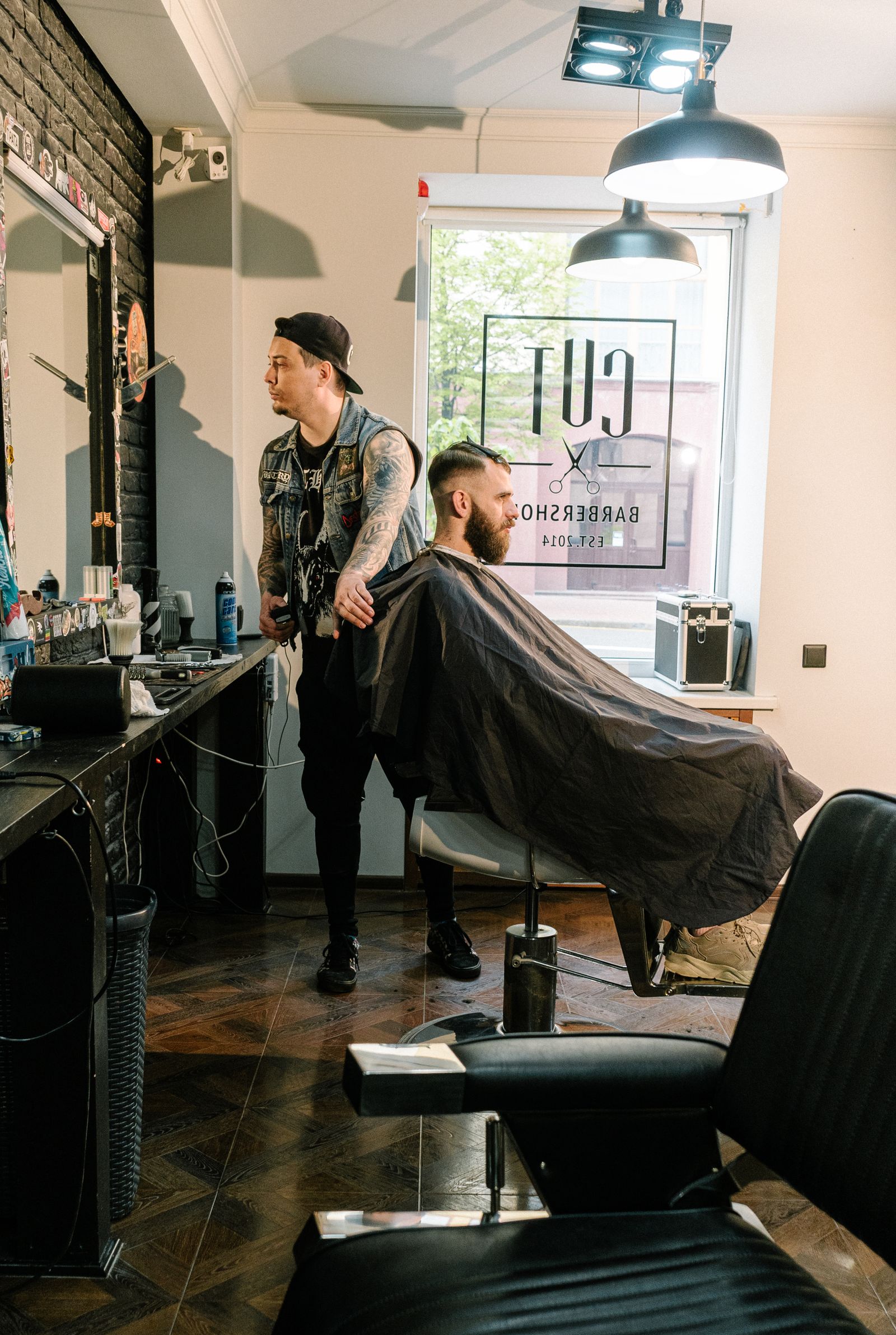
Photos in this guide are representative stock images.
← All guides from Raeford's Barber Shop← Back to Raeford's Barber Shop